
Compare complete systems—not sample pieces
Concrete and pavers can both create an excellent driveway, but the small sample in a showroom does not show the full installed system. The real comparison includes demolition, subgrade, base, drainage, edge conditions, reinforcement or bedding, pattern, finish, sealing, maintenance, and repair strategy.
A homeowner who compares only square-foot material prices can miss the work that determines performance. Start with the property conditions and desired appearance, then compare scopes that solve the same problems.
Where poured concrete stands out
Poured concrete supports broad, monolithic forms and modern large-format geometry. Joints can be organized into a clean architectural pattern, and the finish can range from a traditional broom texture to integral color, exposed aggregate, or a specialty surface system.
Concrete is not crack-proof. Thoughtful joint placement, site preparation, reinforcement strategy, curing, and realistic expectations matter. Repairs may remain visible, especially on colored or aged surfaces, which is why early planning is important.
- Strong fit for modern, continuous geometry
- Many texture and color directions
- Fewer individual units to shift
- Joint and crack planning is essential
Where pavers stand out
Pavers offer a wide range of colors, formats, borders, and patterns. Individual units can be lifted for certain underground repairs and replaced, although color matching may change as materials weather or product lines evolve.
The base and edge restraint are critical. Settlement, rutting, spreading edges, joint-sand loss, weeds, and movement are often symptoms of system details rather than the paver itself. A well-installed paver driveway begins below the visible surface.
- Flexible patterns and border options
- Individual units may be repairable
- Base and edge restraint drive performance
- Joint maintenance should be expected
Consider drainage and maintenance honestly
Neither material automatically solves drainage. Traditional pavers are not the same as a fully designed permeable pavement system, and concrete still needs carefully planned slope and discharge. Existing garage elevations, swales, downspouts, and low areas should guide the design.
Maintenance preferences also matter. Some owners prefer resealing and caring for a continuous concrete finish. Others are comfortable refreshing paver joints and addressing localized movement. Ask for a realistic care plan rather than a promise of a maintenance-free surface.
Choose the solution that fits the house
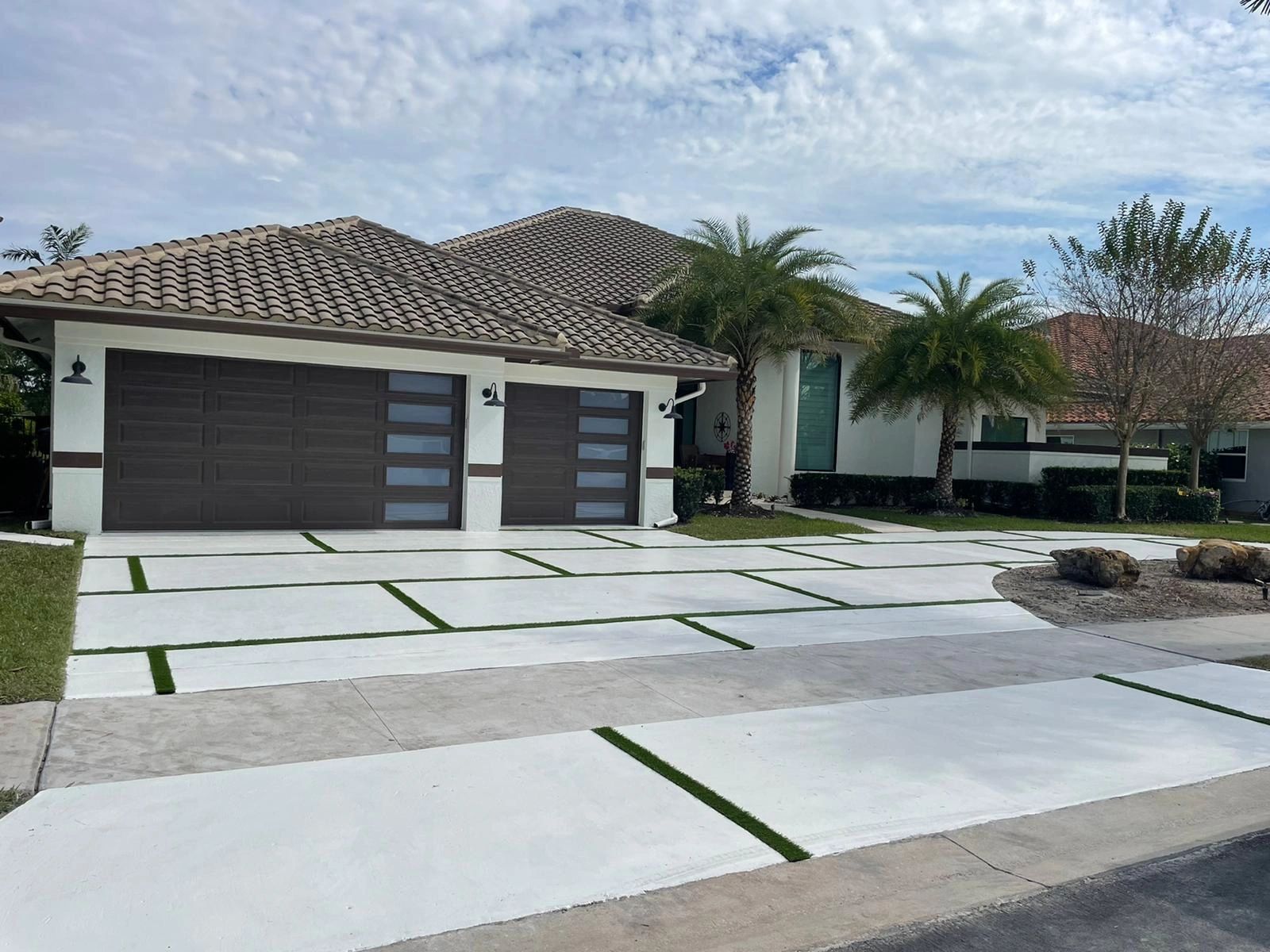
Modern homes often benefit from restrained concrete panels, while Mediterranean and transitional homes may pair naturally with stone or paver texture. Those are tendencies, not rules. Porcelain borders, turf joints, and mixed-material details can bridge styles when they are used with discipline.
The right answer comes from a site-specific design and equivalent scopes. Review layout, preparation, drainage, finish, maintenance, warranty terms, and repair expectations side by side before deciding.